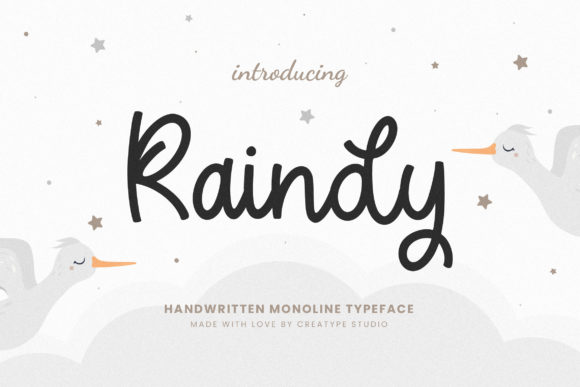
Raindy: A Cheerful Handwritten Font
There I was, staring at a blank brand board, trying to figure out how to bring a sense of warmth and playfulness to a new café project. The client wanted something that felt personal, like the kind of place where you could imagine sipping coffee while reading a book in a cozy corner. That’s when I reached for Raindy, a handwritten font that feels like it was made with love.
Raindy has this soft, flowing style that makes it feel approachable and friendly. It’s not too ornate, but it still carries that handcrafted charm that can make a brand feel more authentic. The letterforms are slightly irregular, which gives it a natural, human touch—perfect for a small business that wants to stand out without being too flashy.
Testing Raindy in Real Design Scenarios
I started by testing it on a logo draft. The first thing I noticed was how well it worked as a headline or display font. It added a sense of personality that a standard sans serif might not have. I paired it with a simple serif font for the tagline, and the contrast created a nice balance between modern and traditional.
Next, I tried it on a packaging mockup. The font looked great on a coffee bag, giving it that handmade feel that aligns with the café’s vibe. I also used it on a label sticker for a custom syrup bottle, and it held up well even at smaller sizes. It wasn’t too difficult to read, which is a big plus for product labels.
On a shop sign, Raindy really shone. Its curves and slight variations gave it a unique character that made the sign feel more inviting. It didn’t overpower the space, but it still caught the eye in a subtle way.
When to Use Raindy
Raindy works best as a display or accent font. It’s not ideal for long paragraphs of text, but it shines in headlines, logos, and short-form copy. For a branding project, I’d use it for the main logo and then pair it with a more neutral typeface for body text. This helps maintain readability while keeping the design cohesive.
It also pairs well with other handwritten or script fonts, especially if you want to add a bit of visual interest. I’ve found that using it alongside a clean sans serif creates a nice contrast that keeps the design from feeling too busy.
Practical Tips for Using Raindy
Before committing to a full brand system, I always recommend testing Raindy in different contexts. Try it on a business card, a social media graphic, or a website header. See how it looks in both light and dark mode, and check how it scales at different sizes.
One thing to note is that Raindy is PUA encoded, which means it has a wide range of characters and symbols. This is helpful if you’re working on multilingual projects or need access to special glyphs. It also makes it easier to use in design software without worrying about missing characters.
When it comes to licensing, Raindy is a commercial font, so be sure to check the terms if you’re using it for client work. Most fonts like this come with clear guidelines for use, but it’s always good to double-check before finalizing a project.
Designing with Raindy in Mind
Using Raindy in a branding project isn’t just about aesthetics—it’s about creating a mood. The font adds a sense of warmth and friendliness that can influence how a brand is perceived. It’s perfect for businesses that want to feel more personal, like a boutique, a skincare brand, or a creative studio.
I’ve used it in editorial design for a local magazine, where it worked well as a headline font. It also made a great addition to a flyer promoting a community event, adding a touch of whimsy without being distracting.
For digital templates, Raindy can be a fun way to add a unique flair. Whether it’s a social media post, a website header, or an email newsletter, it brings a sense of creativity that can help a brand stand out.
Final Thoughts on Raindy
Raindy is more than just a font—it’s a tool for storytelling. It helps convey a message without words, adding a layer of emotion that can make a brand more memorable. Whether you’re working on a café, a handmade shop, or a creative studio, this font can help you create something that feels genuine and thoughtful.
If you’re looking for a font that adds a cheerful, handmade vibe to your designs, Raindy is definitely worth considering. It’s versatile, expressive, and perfect for any project that needs a little extra personality.
As a designer, I’ve found that Raindy is one of those fonts that can elevate a project from good to great. It’s not just about the look—it’s about the feeling it brings to the design. And that, in my opinion, is what makes a font truly special.